
What Is a Brake Caliper and How Does It Work?
Brake Caliper: Definition and Operating Principle
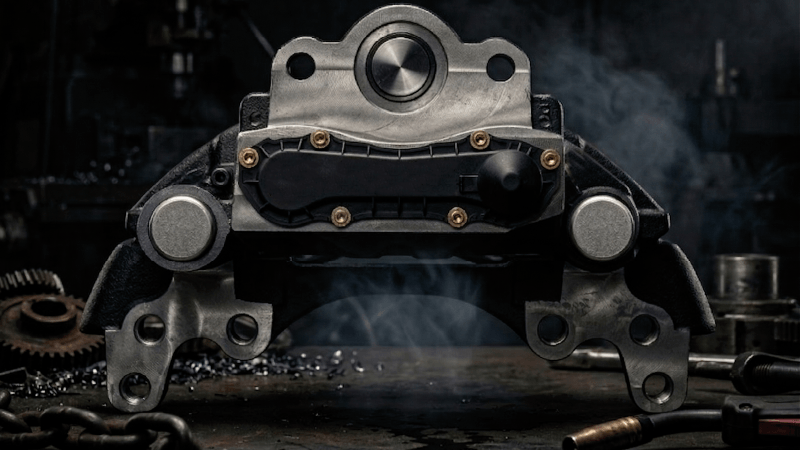
The brake caliper is a critical hydraulic component within a vehicle’s braking system. It is responsible for generating the clamping force required to slow down or stop the vehicle by pressing the brake pads against the brake disc (rotor).
Operating Principle
- Brake Pedal Actuation
When the driver depresses the brake pedal, hydraulic pressure is generated in the brake fluid within the master cylinder. - Hydraulic Pressure Transmission
This pressure is transmitted through the brake lines to the brake caliper. - Piston Actuation
The hydraulic pressure forces the caliper piston(s) outward. - Pad-to-Disc Contact
The piston pushes the brake pads against the rotating disc, creating friction that reduces wheel speed.
Brake System Configurations
- Disc Brake Systems: Equipped with calipers on each wheel.
- Mixed Systems (Disc + Drum): Calipers are typically installed on the front axle only.
- Full Disc Systems: Calipers are present on all four wheels.
Maintenance and Importance
Brake calipers are subject to wear, contamination, and thermal stress. Regular inspection and maintenance are essential to ensure optimal braking performance and safety.
Common Brake Caliper Failures
- Caliper Seizure: Caused by corrosion or contamination, leading to constant pad contact.
- Hydraulic Fluid Leakage: Reduces system pressure and braking efficiency.
- Uneven or Worn Brake Pads: Results in decreased braking performance.